carrying out this work, our objectives fu eron, namely:
The development of basic skills in the l to Laboratory of Chemistry, in terms of safety standards to follow, the correct use of their material mininstrado and proper treatment of the products and reagents.
The practical use of our knowledge p Revios, theoretical, inorganic formulation to apply these out of paper.
The introduction of the concept of chemical reaction mica, reagents and products as well as learning the stoichiometric adjustments these reactions. It also works with the concept of dissolution.
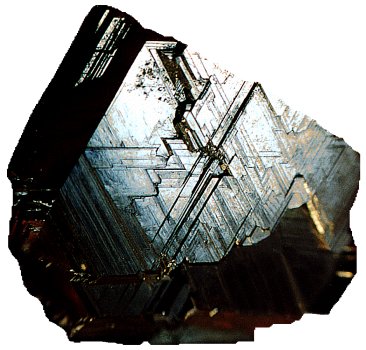
For this we need the following reagents s (co n order to obtain the subsequent products):
Zinc (react.)
hydrochloric acid (react.):
zinc chloride (prod.):
Hydrogen (prod.):
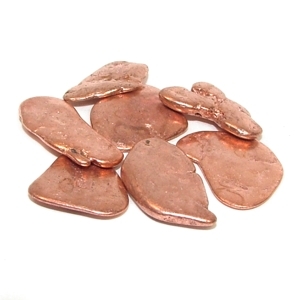
Copper (react.):
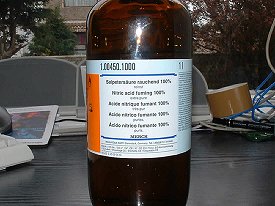
Nitric Acid (react.):
cupric sulfate (prod.):
diox. nitrogen (prod.):
Ammonium chloride (react.):
Sosa (react.):
Sodium chloride (prod.):
Ammonia (prod.)
Many of the chemicals that we were potentially dangerous to handle, so it was essential to follow exactly the teacher's instructions and never do something wild with the substances. We had to wear special clothing (robe) and goggles. The following experiment is reported not to be repeated outside a laboratory or responsible supervision.
was also necessary, as in all practices, track all that was happening before our eyes. In this case, the record was mostly done by video.
INTRODUCTION:
We are conducting an experiment that will show us apart from other things, the law of Conservation of Mass of Lavoisier. This law states that in a chemical reaction, no mass change. The dough will become, but will remain the same amount. This would need to measure, as we have done in previous years, the mass of the products and reagents, and compare them to prove they are identical.
More this is not the end of our practice. It's just one of many milestones that mark the way in this experiment, and one of the starting points for our conclusions and results.
And even with these starting points, we find it difficult to predict (in contrast to previous practice) results in the laboratory. Okay, we know that a particular reagent will give us products that we know, yes, but we are almost impossible to imagine what the outcome, current and visible in our experiment. At best, we know that the pH of a given reaction is acid or other reaction is exothermic and heat our fingers, but little further.
For real data, we need to get wet feet. We need to experiment.
EXPERIMENTAL WORK:
In this practice we have developed a series of experiments reagents, to produce chemical reactions.
chemical reactions, of which we speak, are processes in amending initial substances (reagents) in different substances (products).
Before starting work, our teacher told us that we should protect ourselves, because we were going to handle certain substances that are dangerous. We protect gown and goggles; reminded us that we should not directly smell the substances they were going to work, but from afar. He also said that it is very important after handling chemicals we wash hands thoroughly.
started pouring hydrochloric acid into the test tube (that is discharged by the teacher). Later we put in a little piece of zinc and quickly we cover the vent with the balloon, so that the gas stays inside. Zinc contact hydrochloric acid begins as to be in a state of ferment, then the test tube gets hot by the bottom. The balloon, if it contains enough gas, rise up (like balloons). Be very careful, because if they get close a match or a lighter explodes making a loud noise and a kind of flare.
1 test tube, glass rod, paper and pH meter large beaker.
NOTE: Nitric oxide, quickly oxidizes. RED IS THE GAS DI NITROGEN OXIDE.
We started by pouring a small amount of AC. oxide (the teacher), and then we added a couple of strands of copper. We saw the tube contents was green and smelled like chlorine in pools, in addition to the bottom warmed. The "gas" that existed in the walls of the tube, color was yellow. Then with a glass rod put a drop on a paper pH meter, and went red (very acidic). then pour it into a large beaker and we put water until it was neutral, its color changed to blue.
started pouring into the tube a small amount of water and add a pearl of soda (to look like a pearl moth, this product is provided by the teacher). Are preparing a solution of soda, the bottom of the tube is hot.
After ammonium chloride added in small quantities, and heat the solution into the burner, always with great care, that's when the smell of ammonia invaded the school laboratory.
RESULTS
Well most of all the results have been explained in the previous section, we will sum it up in some videos that we recorded in class. But our observations we are going to put you.
Experiment 1: production of hydrogen gas
As we have seen the video, there is little to say except things that a video is not simple can perceive. For example: do not know if you have seen, but when you add zinc to hydrochloric acid, enters in a state of efesverscencia, and the back of the tube is more than hot, burning. Although we do not assure you that if you worked on the globe there is enough hydrogen balloon goes up, as they are inflated with helium. I do not know if you ever noticed what happens when you get close a match, leaving a flame can leave you without eyebrows, and a sound impressive do not know how the class next door did not come to see what happened. Here is another video showing precisely this, and how the teacher did.
Experiment 2: production of nitrogen dioxide.
Here too there is little to say as we have the picture of the previous section (experimental work) and this video, but again do not think that you are going to get rid of the observations, because there are things that you do not you appreciate the video, like the smell, if it burns or not, etc.. And for this we are ourselves. In this experiment we can only clarify the smell, which was similar to pool chlorine, and the end of the pipe was hot. Also, if you have not seen, green the nitric acid with copper and shortly after up a kind of gas that remains on the walls, the more down, more orange and the more up, more yellowish. In this new video we measured the pH after the reaction, and mix it with water.
Experiment 3: acquisition of ammonia.
In this experiment I'm just stating the smell and tempratura. At first, the dissolution of soda did not smell anything, more like the ammonium chloride solution. But what if the tip is appreciated burned, as in previous experiments. The contents of the tube started to smell when I started to warm up.
QUESTIONS:
1. a) Zn + HCl ---> ZnCl + H2 / adjusted / 2Zn + 2HCl ---> H2 + 2ZnCl b) Cu + HNO3 ---> Cu (NO3) 2 + NO + H2O / adjusted / 6HNO3 2Cu + ---> 2Cu (NO3) 2 + 2NO + 3H2O + 1 / 2 O2 c) NH4Cl + NaOH - -> NaCl + NH3 + H2O (this is not needs to be adjusted)
2. reagents are colored in pink and blue products.
3. We prepared a solution of soda water. The solvent was water and solute soda (sodium hydroxide). When dissolved in water, this solution frees up a lot of heat, but also takes to dissolve completely.
4. All the reactions we've done have been exothermic, gave off heat. The first reaction for hydrogen gas, heated up the base of the tube quickly. The second, nitrogen dioxide, also off heat, although less. The reaction of ammonia, the latter off more or less the same amount of heat the hydrogen gas.
5. a) Gas Hydrogen With a standard temperature and pressure, hydrogen gas is a diatomic colorless, odorless, nonmetallic, tasteless and highly flammable. It is also the lightest atomic element. It has a melting point of -259 º C and -252 ° C. boiling b) Nitrogen dioxide : This toxic gas, red brown, with a characteristic odor, clear and pervasive. NO 2 is one of the most prominent air pollutants. Its melting point is -12 º C and boiling at 21 ° C. c) Ammonia is normally found as a colorless gas with a pungent odor. There is a marked absence of water in ammonia, which causes that must be kept at high pressure or low temperature: boiling point at -33 º C, and fusion to -77 º C.
6. Hydrogen : Normally a colorless, odorless and tasteless, composed of diatomic molecules, H2. The hydrogen atom, the symbol H, consists of a core unit positive charge and one electron. Has atomic number 1. It is one of the main constituents of organic matter, and is distributed throughout the universe.
The most important use of hydrogen in the synthesis of ammonia. The use of hydrogen is growing rapidly in the oil refining operations such as breaking of hydrogen and hydrogen treatment to remove sulfur.
Nitrogen Dioxide: nitrogen oxide (IV) or nitrogen dioxide (NO2) is a chemical compound composed of the elements nitrogen and oxygen major pollutants among the various oxides of nitrogen. Nitrogen dioxide is brown-yellow. Is formed as a by-product in combustion processes at high temperatures, such as motor vehicles and power plants. Is harmful to health.
Ammonia: Ammonia is a chemical compound whose molecule consists of one atom of nitrogen (N) and three hydrogen atoms (H) according to the formula NH3. In aqueous solution can behave as a base and forming the ammonium ion, NH4 +. Ammonia, at room temperature, is a colorless gas with pungent smell and nauseating. Occurs naturally by decaying organic matter. It dissolves easily in water and evaporates quickly. Usually sold in liquid form. Ammonia is produced naturally in soil by bacteria, decaying plants and animals and animal waste. Ammonia is essential for many biological processes. Most of the ammonia produced in chemical plants used to manufacture fertilizers. The rest is used in textiles, plastics, explosives, production of pulp and paper, food and beverages, household cleaning products, refrigerants and other products. It is also used in smelling salts.
7. The pH is a measure of acidity or alkalinity of a solution. The pH is the concentration of hydrogen ions, or cations [H +] present in a given substance. The acronym stands for "potential hydrogen." This term was coined by the Danish chemist Sorna, who defined it as the negative logarithm base 10 of the hydrogen ion activity. Because it was the one in May acidity.
8. Yes, because in small quantities is not as clean, whereas the nitrogen dioxide, which is very bad, we put in a pot of waste. It is true that they are contaminants, but not too much the amount you get in the reactions.
9. think it's because it was not necessary to heat the 1 and 2 for this reaction, in contrast to that smelled of ammonia needed to be warmed, if only slightly.
CONCLUSIONS:
As we mentioned before, we were unable to imagine the results of our experiments. And, of course, what we could ever imagine would happen would be far from what we have achieved in reality. Would never have expected that the copper and nírtico acid would result in a bright green uncolor liquid and a gas orange, or the hydrogen accumulated in the balloons would explode upon contact with fire so dramatically, and that we could get it so easily ...
other hand, I understand, that we have achieved our objectives. Without the security of the proposed rules that we understand and obey, someone could have done with an eye less, his skin burned or even worse consequences. No need to go far to find out what can cause the misuse of laboratory chemicals as dangerous as these, and even more people my age (whose greatest desire, let us say, is precisely to strictly abide by regulations .)
We have learned, therefore, to have proper behavior in the presence of potentially dangerous and harmful, and smooth handling. Also, since we had set the goal of applying our wisdom to the practice hitherto purely theoretical, inorganic chemistry, we have to spend real life something that had so often done with pencil and paper, something as simple as stoichiometrically adjusted chemical reactions, using reagents and this time we can see, smell and touch (well, maybe not so much play.) Now we see a chemical reaction as it actually is, and we understand better, it is only order common sense is easier to understand something you can see how real that a lot of letters and numbers scattered on paper.
BIBLIOGRAPHY:
We did not need to consult any book or website for the report, we have only stated in our press and our memory.




 indicator paper pH
 for the third experiment:


0 comments:
Post a Comment